A team with a history as deeply rooted as Athletic Club has countless stories that make it a truly unique institution in world football. The evolution of the Athletic Club kit is a tale of journeys, chance and the search for an unmistakable identity.

16 Milestones in the History of the Athletic Club Kit
The transformation of the “Lions” colours has gone through several fascinating stages, marked by English influence and the evolution of sportswear design.
- 1898 – The white origins: in its early years, the club wore a white jersey and shorts with black socks, a look that was very common in amateur football at the time.
- 1902 – The elegance of Blackburn Rovers: Club member Juan Moser brought navy blue and white striped shirts from England, replicating the Blackburn Rovers kit, for the first Copa del Rey.
- 1910 – The chance decision of Juan Elorduy: during a trip to England, Elorduy was unable to find Blackburn’s blue shirts and instead bought 50 red and white striped jerseys from Southampton F.C. The team debuted the red and white kit on 9 January 1910.
- 1913 – Black becomes permanent: black shorts were officially adopted on a permanent basis, replacing the previous white and blue and creating the classic silhouette we know today.
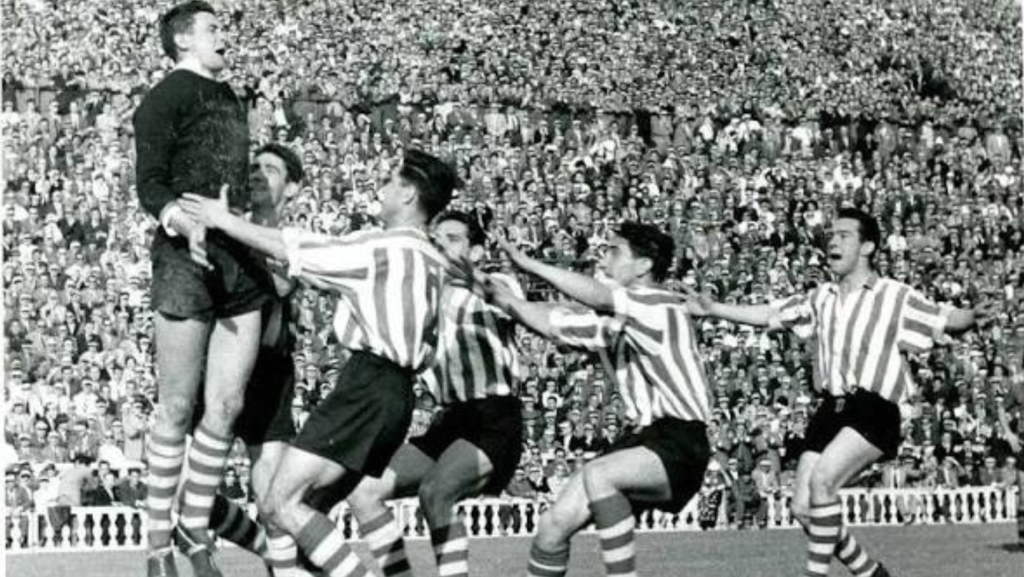
- 1950 – A change of socks: for the first time, the socks changed from black to red and white, seeking a complete unification of the club’s colours.
- 1960s and 1970s – Fit and modernisation: heavy shirts gave way to more fitted cotton jerseys and shorter shorts to improve performance.
- 1974 – Return to black: the socks returned to black, this time with a red-and-white trim at the top.
- 1980 – The Adidas era: Athletic signed its first major agreement with a global brand, modernising fabric quality for a decade.
- 1990 – The Kappa period: more daring designs and new manufacturing techniques were introduced, offering a better fit.
- 1998 – The Centenary: a special kit featuring the “1898-1998” logo was released to celebrate the club’s 100th anniversary.
- 2001 – 100% Athletic: the club created its own sportswear brand to manage its identity and also launched a range of casual clothing.
- 2004 – The “Ketchup Shirt”: designed by artist Darío Urzay for the UEFA competition, its abstract style sparked intense debate. Today it remains a key piece when visiting San Mamés and the Museum.
- 2008 – The first commercial sponsor: after 110 years of history, the shirt featured advertising for the first time through an agreement with Petronor.
- 2009–2012 – The Umbro period: the club opted for a more classic look, including polo-style collars, and even experimented with reversing the order of the stripes.
- 2013–2023 – Nike and New Balance: the kit reached its highest technological level, integrating innovation while preserving its historic essence.
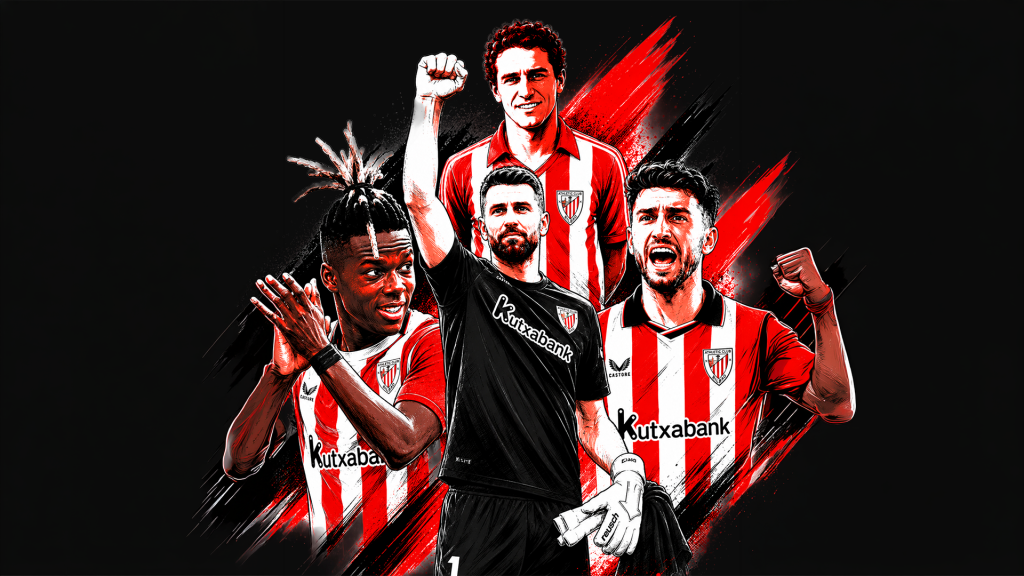
Castore and present day: the kit continues to adapt to LaLiga and European competition regulations while always respecting the heritage that defines the club.
Design Evolution: from tradition to technology
Throughout its history, the kit has evolved not only in colour but also in function. The adoption of black shorts and socks from 1913 onwards gave the team a sobriety that has become one of its defining characteristics. Each decade has reflected the stylistic trends of its time, allowing the club to remain at the forefront.
For fans who want to wear a piece of that history, the Athletic Club Official Store offers the 2025/26 season kits, perfectly blending past and future.
An identity that transcends football
Every detail, from commemorative crests to the third kit inspired by the club’s lion symbol, seeks to connect with the spirit of the athleticzale fans. It is an identity you can even experience beyond football by completing your visit with the dining options at San Mamés after exploring the stands.