Bilbao’s walls no longer simply bear the weight of its industrial past; today, they speak, sing and capture the spirit of a city in a constant state of flux. What began as spontaneous artistic expressions in forgotten corners has evolved into one of Bilbao’s most compelling cultural attractions. Planning a route to discover urban art in Bilbao means looking beyond the usual map and allowing yourself to be surprised. It is an ideal cultural experience to enjoy on foot in the early morning or at sunset – when the light is perfect for photography -, while making the most of the city’s convenient transport network and stopping at the cafés, bars and restaurants you encounter along the way.
The estuary as a canvas: working-class echoes and new giants
Water has always been the driving force behind Bilbao, and the banks of the estuary provide the perfect starting point for a large-scale visual journey. The route linking Deusto Bridge with the island of Zorrozaurre showcases some of the city’s most striking large-format murals, integrated into former industrial structures. Following the river towards Zorroza and Olabeaga, shades of green and blue take over the walls, evoking Bilbao’s maritime and working-class heritage through powerful naval aesthetic. One particularly striking feature in this area is Soñar (“Dream”) by SpY in Olabeaga, an imposing conceptual intervention made up of giant lettering that engages directly with the urban transformation of its surroundings.
Further into the heart of the city, the architectural contrasts of the Ensanche district and the historic character of the Seven Streets reveal far more intimate forms of street art. While Gran Vía and the surrounding streets feature corporate-style murals integrated into commercial façades, the Old Town and the passages around La Ribera are filled with stencils, typography and paste-ups layered with cultural messages. Recognised works such as Giltza Bat, created by Verónica and Christina Werckmeister beneath La Salve Bridge, or the moving mural dedicated to the “Supervivientes de la violencia machista” (“Survivors of Gender Violence”) by Ruth Juan at La Merced Quay, demonstrate how Bilbao’s walls serve as a committed platform for social expression.
Three must-see mural routes in Bilbao
- Deusto – Zorrozaurre – Olabeaga. Harbour-inspired tones and large-scale works integrated into the industrial landscape.
- Old Town – Ensanche. Stencils on shutters, passages filled with typography and contemporary murals with a modern design aesthetic.
- Santutxu – San Francisco – Recalde. Community colour, powerful social stories and squares offering excellent photographic viewpoints.
Urban art in Bilbao’s neighbourhoods: colour, innovation and storytelling
Heading up towards Santutxu, Begoña or San Francisco means immersing yourself in the liveliest, most community-driven and, at times, most daring side of urban art in Bilbao. Exploring these areas calls for plenty of stops to admire internationally renowned works, including the collage-inspired “Futurismo Primitivo” (“Primitive Futurism”) by Sixe Paredes and “El fin justificado” (“The Justified End”) by Aryz in Bilbao La Vieja. The route gains further depth through the emotional impact of SUSO33’s intervention on Concepción Street and the vibrant mosaic in Plaza Kirikiño, in Iralabarri, spaces where the street becomes a place for gathering and reflection.
Urban art in Bilbao’s neighbourhoods serves as a bridge for intercultural dialogue; façades do more than simply decorate- they celebrate the community’s roots, social struggle and aspirations.
A key part of this phenomenon can be attributed to festivals such as the Bilbao Margo Festival and to the involvement of both local and international artists who have reimagined the landscape of Biscay. Creators such as J. Maier, known for his introspective mysticism, or Marta Mena, with her striking portrayals of everyday figures, share the spotlight with leading names such as Okuda San Miguel, creator of the explosive and geometric “Cara de la Cultura” (“Face of Culture”) in Abando. This blend of styles is equally present in collective works such as “La Flor de la Vida” (“The Flower of Life”) in Recalde, a symbol of springtime renewal, and in the fantastical, nature-inspired creations of Dulk, artist behind the celebrated “Unicornio de Santutxu” (“Santutxu Unicorn”), an imaginative work that invites daydreaming amid the neighbourhood’s apartment blocks.
Athletic Club murals: football as the art of the land
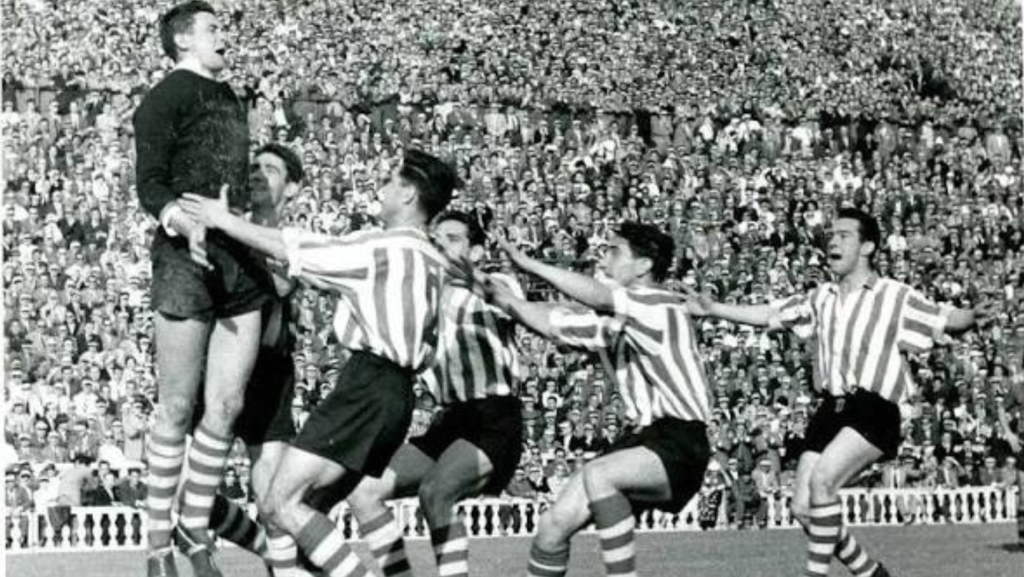
It is impossible to understand the culture of Biscay without recognising the abiding presence of Athletic Club, a passion that naturally finds expression in Bilbao’s murals and those of the surrounding area. Walls become secular shrines celebrating club legends and its enduring mythology — a connection football enthusiasts can explore in greater depth through the exhibitions at the AC Museoa.
In the wider metropolitan area, the moving Athletic mural in Lamiako stands out as an especially significant landmark. It was on the former marshland grounds of Lamiako, originally home to a racecourse, that the red-and-white club forged some of its earliest footballing achievements before the construction of its iconic Cathedral, San Mamés. Opened to mark the club’s anniversary at the local five-a-side football ground, this large-scale mural depicts the game’s pioneers wearing the historic blue-and-white kit of the club’s earliest years, framed by informative panels that highlight the deep-rooted connection between Lamiako and the birth of Basque football.
This respect for heritage is complemented by celebrations of the club’s more recent history, such as the famous mural of the Williams brothers and Muniain in the neighbouring district of Lutxana, later joined by other prominent Athletic Club players. Created by artist Carlos López (Kicking Art) to commemorate the club’s twenty-fifth Copa del Rey title, the mural has become a genuine social barometer and an essential place of pilgrimage for supporters, proving that street art in Biscay is written with red-and-white passion.