The history of industrial Bilbao is also the story of one of Europe’s greatest urban transformations. For much of the 20th century, the city was defined by its shipyards, steel industry, and busy port. However, the industrial decline of the 1980s paved the way for an ambitious regeneration process that turned Bilbao into an internationally recognised destination for culture, architecture, and urban innovation.
To truly understand this remarkable transformation, there is no better way than to walk along the estuary and explore the city’s most iconic districts. Here, former warehouses and loading docks have been reinvented as museums, parks, and gathering places. Today, Bilbao’s urban landscape is shaped by its charming neighbourhoods, where the medieval layout of the Old Town and its famous Seven Streets blend seamlessly with the modern residential and business developments of Abandoibarra.
Iron, shipyards and the origins of industrial Bilbao
Biscay’s early prosperity cannot be separated from its so-called “red gold”: the easily accessible iron ore that shaped the landscape and forged the resilient local character that would later help the region adapt to future challenges. For decades, the port facilities, the ore-loading docks of Sestao and Barakaldo, and the iconic Iron Pier in Portugalete formed the backbone of European logistics. Although open-pit mines such as Bodovalle have long since ceased operations, restored sites like La Arboleda—where former mining pits have been transformed into beautiful lakes—demonstrate how nature and industrial heritage can be brought together for tourism and educational purposes.
In the heart of Bilbao, the Carola Crane stands proudly opposite the Bilbao Maritime Museum as the city’s most recognisable symbol of its shipbuilding past. Along the estuary, dry docks and quays coexist with the engineering achievements of the 21st century.
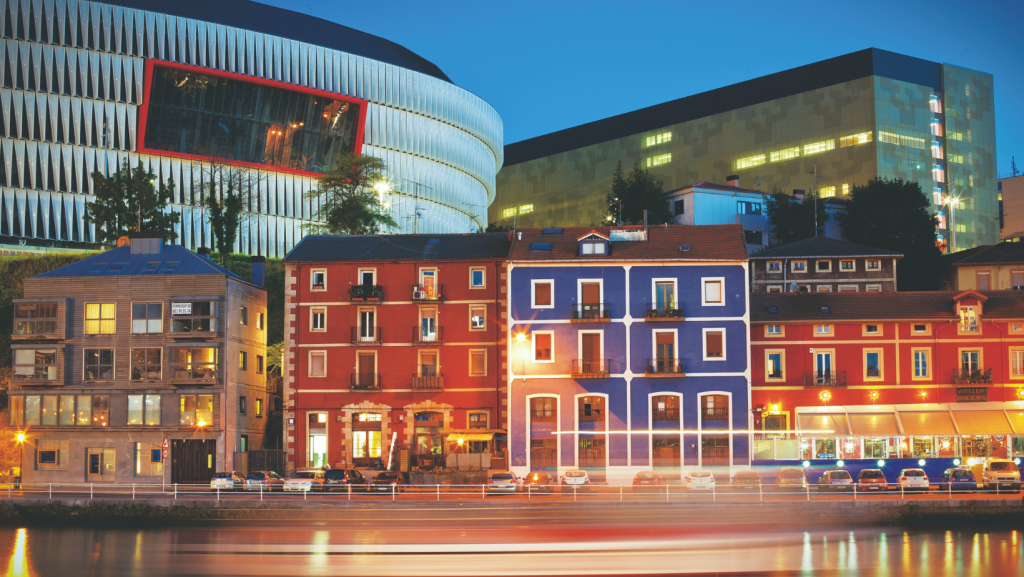
The city’s cultural revolution officially began in October 1997 with the opening of the Guggenheim Museum Bilbao. Frank Gehry’s architectural masterpiece replaced former industrial buildings with an organic structure of titanium, limestone, and glass. This aesthetic transformation lies at the heart of any exploration of Bilbao’s architecture, from the Guggenheim to San Mames—two modern landmarks that stand at either end of the Paseo de Uribitarte, designed to bring people together.
Bilbao’s Urban Regeneration: from Zubizuri to Azkuna Zentroa
Bilbao’s urban regeneration went far beyond the construction of standalone museums, creating instead a network of pedestrian and functional links across the estuary. One of the best examples is the Zubizuri Bridge, designed by Santiago Calatrava, whose elegant white arch provides a direct connection between the historic Seven Streets of the Old Town and the modern architecture of the city expansion.
Likewise, former warehouses that had long outlived their original purpose were transformed into vibrant social and cultural spaces. The former wine and oil warehouse, La Alhondiga, is now Azkuna Zentroa, a cultural centre renowned for its interior, where forty-three uniquely designed columns support the everyday life and leisure of Bilbao’s residents.
This renewed sense of light and vitality also transformed the city’s social life, replacing the austere atmosphere of its industrial past with a warm and welcoming spirit. In Plaza Nueva, framed by elegant arcades, Basque culture is celebrated every day through the tradition of pintxopote, a local custom where local gastronomy becomes a shared social experience.
On the hillsides, landmarks such as the Mallona Steps and the Basilica of Our Lady of Begoña—known locally as Amatxu—remain enduring symbols of the city’s identity, connecting traditional faith with a community that proudly celebrates its recovery from the darkest years of the industrial crisis.
Athletic Club and San Mames: Forging the Pride of Bilbao
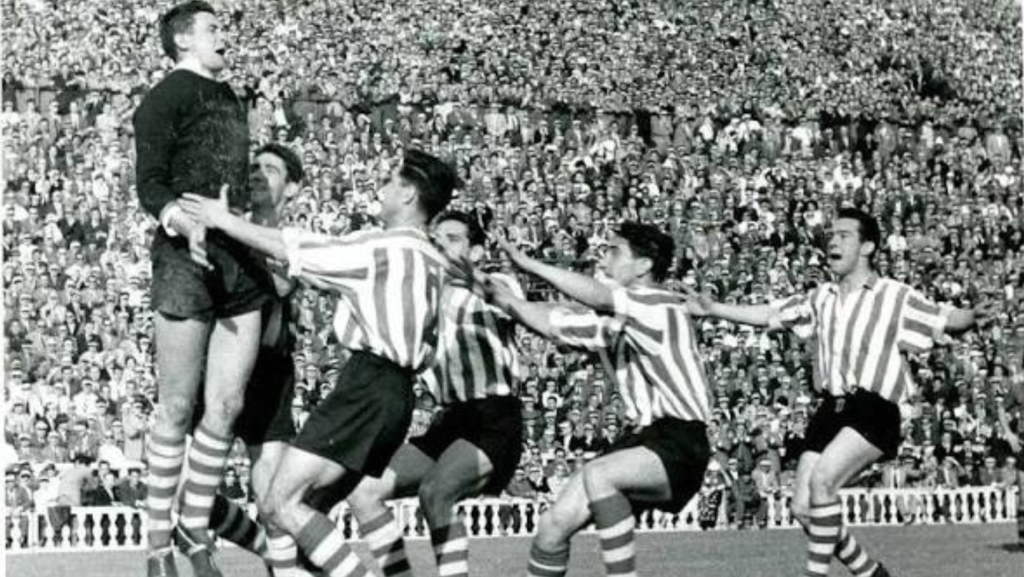
Bilbao’s transformation cannot be understood without recognising the role of Athletic Club and San Mames as symbols of the city’s collective identity. The club has remained an enduring ethical benchmark thanks to its unique philosophy of competing at the highest level using only players from the Basque Country or those developed through its youth academy. Far from being a limitation, this approach has become a cornerstone of the club’s identity, creating an extraordinary bond between the team and the region.
The passion for the red-and-white colours is rooted in the same resilience and determination that once powered Bilbao’s blast furnaces, serving as both a social unifying force and a catalyst for the new wave of tourism arriving in the province of Biscay
Within this new cultural landscape, San Mames Stadium stands as Bilbao’s ultimate symbol of modernity. Those wishing to discover the true spirit of the city can consult the guide to visiting San Mames, including opening hours and ticket information—an essential resource for planning a complete experience of the stadium’s architecture and unique atmosphere.
In addition, for those passionate about historical facts and the memorabilia of the legends who forged the myth of La Catedral, the San Mames Tour platform opens the door to a complete interactive experience. Direct bookings and ticket purchases can be arranged in advance through the official AC Museoa ticket portal, making this an essential visit that shows how the strength of Biscay’s iron heritage still beats at the heart of San Mames.