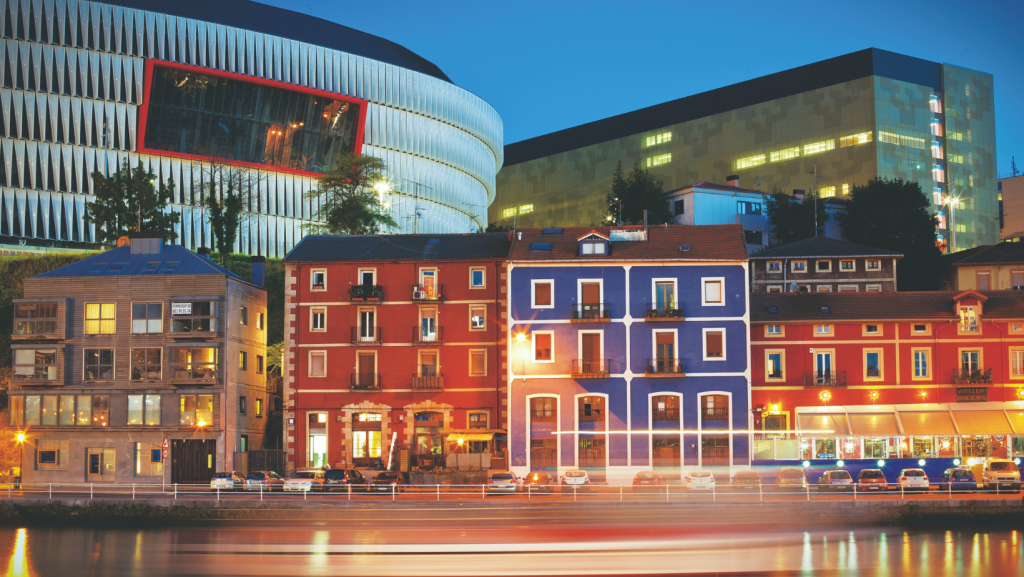

There was a time when speaking about Bilbao evoked a grey postcard of shipyards, industrial chimneys and a smog filled river estuary. However, the city has succeeded in reinventing itself and has become an international benchmark thanks to its urban and architectural transformation. Two of the city’s major symbols have been key in this transformation: the titanium of the Guggenheim Museum Bilbao and the imposing structure of the San Mames Stadium are much more than two milestones of architecture in Bilbao. They both represent the two pillars of modern Bilbao: the cultural and the emotional. Modern Bilbao is based on them, proving that the concept of “Cathedral” applies to contemporary art with the same passion as it does to football.
Architecture in Bilbao: from the titanium of the Guggenheim to the EFTE of San Mames
The town’s aesthetic revolution began on the water’s edge, when the sinuous forms devised by architect Frank Gehry did away with the rigidity of the port environment. The construction of the Guggenheim Museum was a milestone in contemporary urban planning, exceptionally combining glass, limestone and titanium plates that change colour depending on the tones of the whimsical northern light. Such was the impact that it gave rise to the world renowned “Bilbao Effect”, transforming the former run-down industrial docks into clean walkways, green areas and lively squares that have completely redefined the tourist attraction of the whole of the Basque Country.
Just a few kilometres downriver, the San Mames Stadium took up the same baton of architectural innovation in 2013. Designed by the prestigious IDOM studio, the new red and white temple replaced the former and beloved 1913 pitch, which had become too small for the demands of the 21st century. The new venue not only expanded its capacity to 53,331 spectators with a sloping grandstand that ensures perfect visibility, but also revolutionised the landscape with its façade covered in state-of-the-art EFTE panels, creating a dynamic structure that is lit up at night and reinvents the urban skyline. This façade makes San Mames one of the most advanced stadiums in terms of architectural design.
Two cathedrals of modern Bilbao united by the heartbeat of the river estuary
Despite their apparently different functions, the Guggenheim and San Mames share a cultural and tourist synergy that is the backbone of the daily life for the people of Bilbao. The Guggenheim symbolises international openness and creativity, attracting visitors from around the world who seek to immerse themselves in the identity of the land after being amazed by its exhibitions. It is here that San Mames emerges as the great bastion of local tradition, representing unwavering loyalty to a sporting philosophy that is unique in the world.
In fact, the stadium itself has become a meeting point that goes far beyond the ninety minutes of the match, incorporating first rate cuisine with restaurants that elevate Basque cuisine, as well as educational spaces that are ideal if you are looking for museums in Bilbao for children, enabling the little ones to discover the history of the city through its two great passions.For those seeking to experience this urban duality in one day, a route along the Bilbao river estuary with the best spots is the perfect option to walk between the two icons, linking avant-garde art to the heartbeat of football.
What to see between the Guggenheim and San Mames: a must-see route in Bilbao
To understand the heart of the Cathedral of Basque football, the best option is to consult the guide to visit San Mames with timetables and tickets, making sure you plan your day either on a match day or on any other day of the week. The stadium offers an immersive experience that enables fans and onlookers to discover the secrets of the red and white club. By booking the San Mames tour including entrance to the Athletic Museum, visitors can step onto the pitch, walk through the tunnel and explore a collection of trophies and historical documents that preserve the memory of a legendary club.
On leaving the museum, the tram or a convenient pedestrian walkway will take you to the Guggenheim forecourt in a few minutes, where Louise Bourgeois and Jeff Koons’ sculptures will welcome you to an interior that is full of contemporary masterpieces. Bilbao has shown the world how to balance historical heritage with the height of modernity, whereby the roar of San Mames and the shine of the Guggenheim form an indivisible landscape that continues to fascinate all visitors.