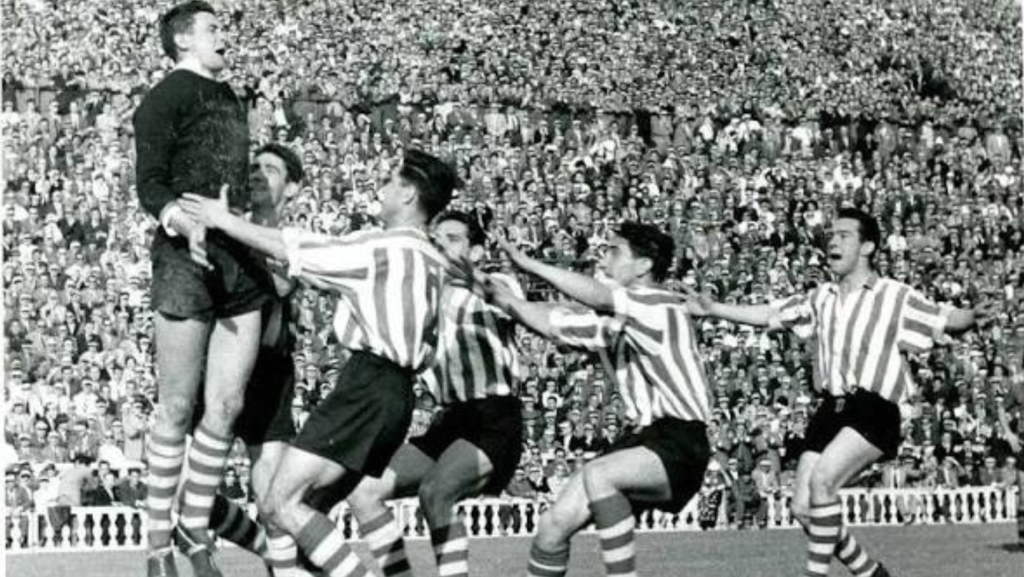
The history of Athletic Club is much more than a list of titles; it is a way of understanding Bilbao and its way of experiencing football. It all started back in 1898, in the small Zamacois Gymnasium, when a group of boys decided that the football that the English had brought to the port was more than just a game. That seed developed into an identity that amazes the world today. What started out with blue and white shirts was changed to today’s sacred red and white stripes in 1910. Don’t just look for dates here; look for the story of a team that decided to set itself apart from the outset. It is possibly the most romantic chapter in the entire history of football.
Athletic Club’s philosophy: a unique identity in the history of football
What makes a club capable of competing against global giants only with local players? The answer lies not in a regulation, but in our understanding of life. This commitment to its own was reinforced with the creation of Lezama in 1971. It wasn’t just about building a training ground; it was about building the place where our essence is nurtured.
For any traveller who comes to Bilbao, discovering that Athletic survives in the elite category with local players is a milestone that breaks the mould. It is a wonderful exception in a sport that seems to have forgotten its roots. From Zarra to Iñaki Williams. The chain does not break. That mystique is what fills San Mames every Sunday, because fans don’t just see a player, they see one of their own. It is that unconditional loyalty that turns every match into something that goes way beyond the sport.
Legendary moments and forging the San Mames legend
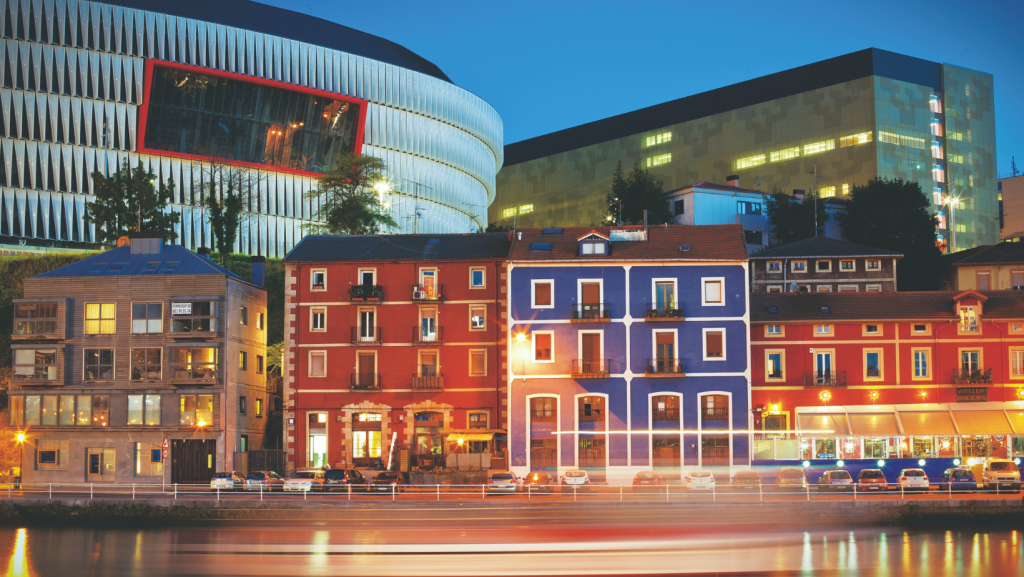
If Athletic is the soul, San Mames Stadium is the temple. “The Cathedral”. The name is no coincidence; it was coined since Pichichi scored the first goal in the old stadium in 1913. It was there where the golden years of the 1930s were enjoyed, with those Cups that are now legendary, and where we laughed and cried on nights in European competition that still make people’s hair stand on end. The 2013 move to the new stadium did not quench the atmosphere; on the contrary, the mystique still lives on, floating between the structure and the pitch. It is the same place where José Ángel Iribar became eternal under the goalposts.
It is impossible not to feel a shiver down one’s spine when remembering the “gabarras” (barges) of the 1980s or the impossible comebacks. This epic period is what connects the history of the team with that of the city itself. In fact, if you take the route along the river estuary, you will see that the industrial past of the docks and the glory of Athletic are one and the same. We are a team that knows where it comes from: from iron, sweat and unwavering faith that has enabled us to go on to win Leagues and Cups.
The AC Museum as the guardian of the lions’ memory
To really understand this feeling, you have to get down in the mud. Or in other words, enter the AC Museum. Don’t expect a boring exhibition of dusty showcases. It is a visual and emotional journey through the objects that have made us great: ranging from Zarra’s worn-out boots to Txopo’s gloves. It is the place where history can be touched and felt, the place where you understand that Athletic is not just a club, it is a family that keeps its memories under lock and key.Rounding off the day with a guided tour of San Mames is a logical finishing touch. Stepping into the players’ tunnel after having read about the lions’ milestones will changes your mindset. You will no longer see just modern architecture; you will see the scene of a battle that has been raging for over a hundred years. Athletic’s history is an invitation to believe that you can get wherever you want through faith and fearlessness.