Athletic Club captains have always been far more than the team’s representatives on the pitch. At San Mames, wearing the captain’s armband means becoming the link between the supporters, the squad, and a century-old philosophy built on youth development, identity, and a deep sense of belonging.This unique style of leadership is shaped from an early age in the Lezama academy, the foundation of the club’s institutional leadership. There, young players learn that the academy is the heart of Athletic Club and that only those who have grown and progressed through the youth ranks can truly earn the responsibility of representing the famous red-and-white colours with pride and dignity.
In the modern era, transparency and strong values in the management of today’s sporting environment require the leader to also act as a social ambassador. The roots of this commitment can be traced back to the legendary Rafael Moreno “Pichichi”, whose leadership between 1911 and 1921 shaped the team’s indomitable character, leaving a lasting legacy through the trophy awarded each season to La Liga’s top scorer and linking today’s strikers with the history of football’s pioneers.
What does it mean to be the Athletic Club captain?
Wearing the captain’s armband at Athletic Club means becoming the guardian of a tradition. Unlike at many other clubs, where the captaincy may be awarded based on commercial considerations or experience gained elsewhere, in Bilbao it represents both moral and sporting leadership, demanding exemplary conduct on and off the pitch. The captain is responsible for passing on the true meaning of the club’s One Club philosophy to new signings and newly promoted academy players, ensuring that hard work, respect for opponents, and the unique bond with the supporters remain at the heart of the team, regardless of the circumstances of the modern transfer market.
This historic responsibility strengthened the club’s national standing during the golden era of Telmo Zarra, who dominated the league by scoring a record 251 goals between 1940 and 1955. During those years, the captain served as the guardian of the club’s competitive spirit and regional pride, ensuring that both remained stronger than the complex political circumstances of the time. In doing so, he helped lay the foundations of a club that would become an international benchmark for integrity.
Historic Athletic Club captains
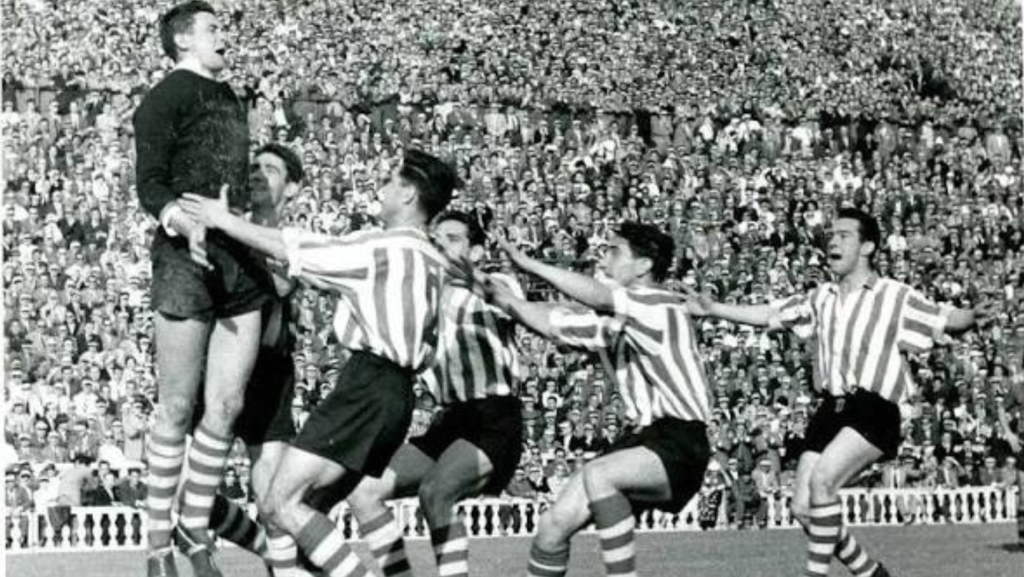
If there is one name that embodies resilience and moral leadership between the posts, it is José Ángel Iribar. Known as “El Chopo“, he served as the squad’s tactical leader for eighteen seasons between 1962 and 1980, leaving an indelible mark on the club’s history. With 614 official appearances, he still holds the club record for the most matches played, and his achievement remains the benchmark for exceptional consistency. Iribar inspired complete confidence, turning San Mames into an impregnable fortress while showcasing local talent on the international stage by winning the 1964 European Championship.Visitors wishing to discover more about his remarkable career can purchase tickets to the AC Museoa and explore the exhibition dedicated to José Ángel Iribar, featuring his personal belongings and memorabilia from his legendary career.
The fierce competitiveness of the 1980s reached its peak under the shared captaincy of Dani Ruiz and the defensive resilience of Andoni Goikoetxea. Dani Ruiz stood out for his outstanding quality on the right wing between 1974 and 1986, scoring 199 goals and leading the team during the legendary league-winning seasons celebrated with the gabarra. Meanwhile, Goikoetxea embodied the more physical and uncompromising side of the squad. Together, the two captains instilled the values of resilience and determination in the face of adversity, a fighting spirit that is vividly brought to life in the temporary exhibition La Promesa at AC Museoa.
The transition to the modern era of football was later embodied by Julen Guerrero, the contemporary definition of a One Club Man. Having joined Lezama at the age of eight, he made 430 appearances and scored 116 goals before retiring in 2006, demonstrating unwavering loyalty at a time of soaring transfer fees and record-breaking budgets. In doing so, he became the bridge between the club’s old guard and a new generation of academy talent.
Modern-era Athletic Club captains
The turn of the century ushered in the captaincy of Carlos Gurpegui, a true symbol of resilience, before the armband was passed to the experienced Aritz Aduriz and later to the shared leadership of Iker Muniain and Oscar de Marcos. Having joined Athletic Club in 2009, De Marcos has made more than 570 official appearances, a tally surpassed only by José Ángel Iribar in the club’s history. His tactical versatility on the right flank, relentless determination, and selfless commitment helped unite the squad during a period of profound transition. That blend of experience and youth ultimately culminated in the historic triumph of the 2024 Copa del Rey, bringing an end to a forty-year wait for silverware.
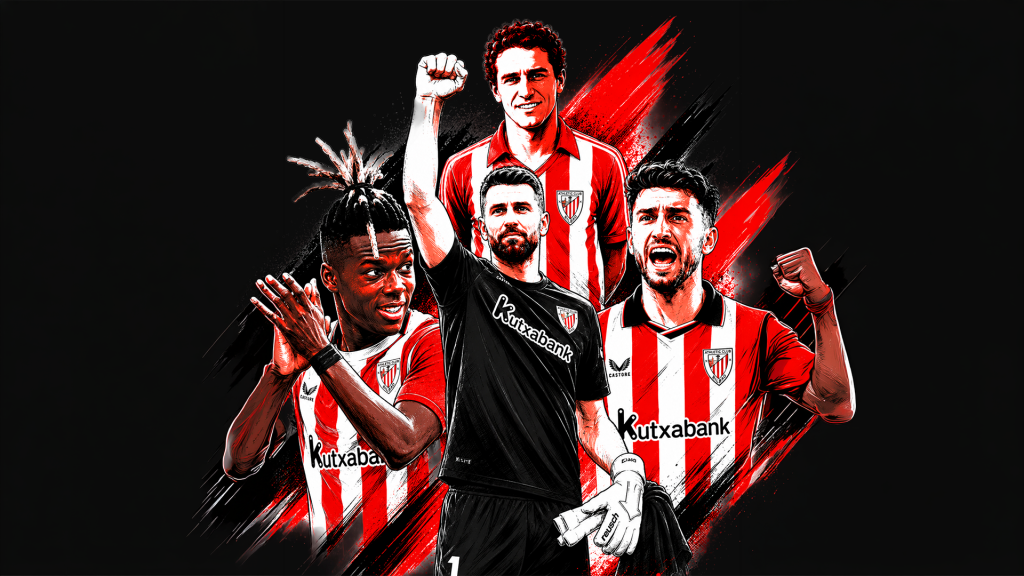
Today, this distinctive style of leadership has naturally passed to Iñaki Williams and the new generation emerging from Lezama. Williams shares the responsibility of leading the squad with remarkable honesty and humility, establishing himself as the latest great symbol of the club’s philosophy. His outstanding pace and tireless work ethic perfectly embody the modern style of today’s Athletic Club. His firm decision to remain loyal to the club he has always called home, despite attractive offers from abroad, reaffirms the value of loyalty to Bilbao and serves as an inspiration for the next generation of Basque footballers.
The Williams brothers’ impact extends far beyond the pitch. Their family story and deep-rooted connection to the club are explored in articles about family experiences at San Mames with Athletic Club’s Williams brothers, reinforcing their genuine connection with the club’s supporters.
The Captain as the link between Athletic Club and San Mames
The Athletic Club captain’s armband is far more than the symbol of a player’s authority to speak with the referee during the ninety minutes of a match. It serves as the vital link between the stands of San Mames and the pitch of La Catedral. Every time a captain leads the team onto the field, he carries with him Pichichi’s legacy, Iribar’s composure, Julen Guerrero’s pride, and Williams’ commitment. It is a continuous chain of shared values that ensures Athletic Club will continue to compete with the same identity and principles that have defined the club since its foundation.
This close bond between the captaincy and the club’s supporters is what makes San Mames different from any other stadium in Europe. The fans at La Catedral expect more than victories; they want to see their own values reflected in the attitude and commitment of the players, and the first person expected to embody that unwavering pride is the captain. Being a leader in Bilbao means understanding that victory has little value if it comes at the expense of the club’s roots and identity. For this reason, today’s Athletic Club captains continue to write their own chapter in the club’s history, proving that loyalty remains the most powerful path to sporting success.